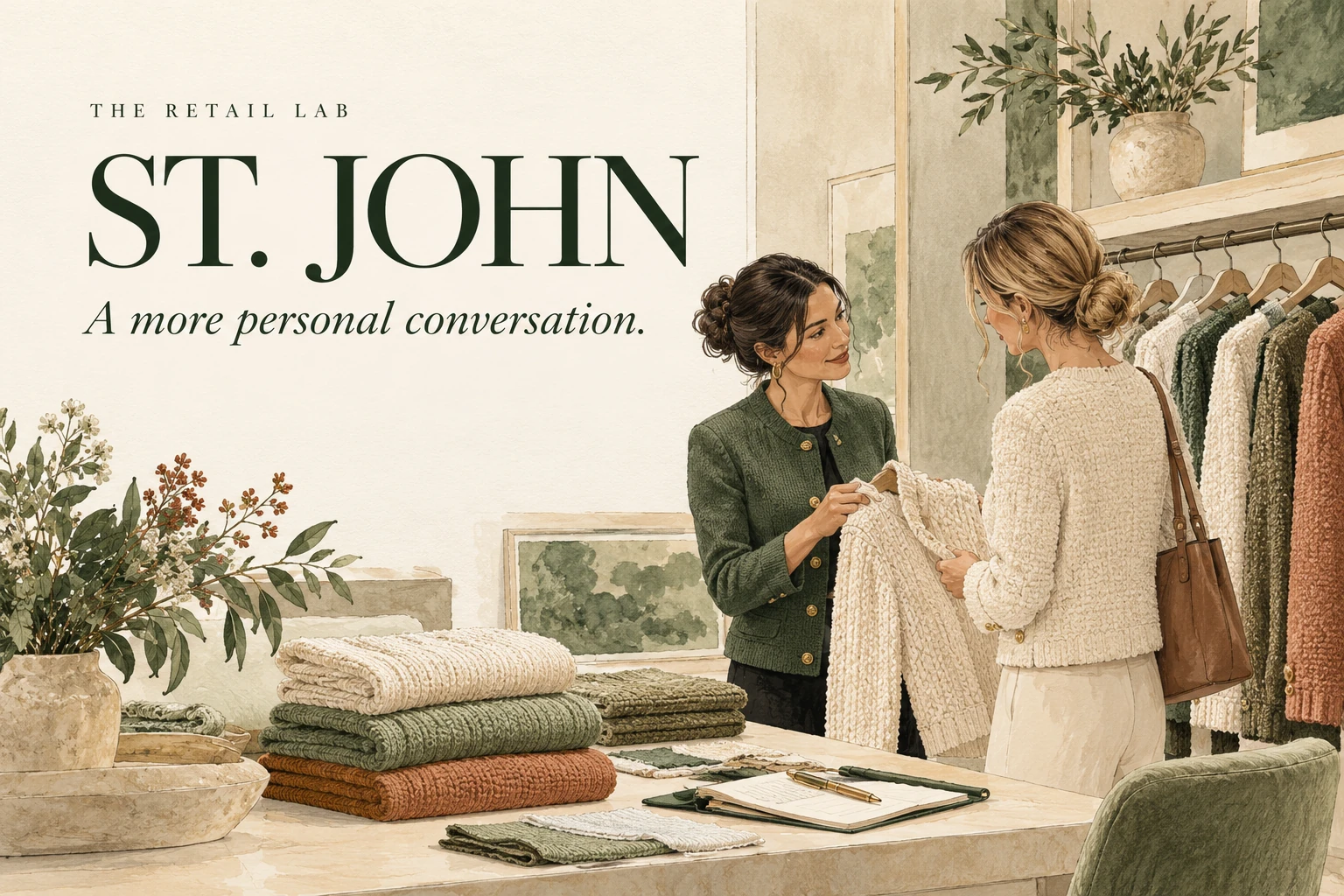
From collection to a useful conversation.
Understand
Her wardrobe
Use preferences and relevant purchase history.
Connect
A complete look
An associate selects a relevant combination.
Deliver
Available locally
Confirm the right size and a convenient next step.
A collection is the beginning
A new campaign can introduce a collection beautifully. The commercial question comes next: how does it become a useful conversation with someone who already knows the brand?
St. John’s official Fall 2026 campaign features Tina Knowles, photographed by Kanya Iwana. The brand highlights refined knits, embellished hardware, playful patterns and a renewed focus on jewelry, describing a new chapter under Humberto Leon. That creates several ways to connect a collection to an individual customer’s existing wardrobe. It does not tell us how the campaign is performing.
The opportunity: make the invitation personal
Our hypothesis is that a carefully chosen clienteling program could help turn interest in the collection into repeat purchases. Clienteling means an associate using a customer’s preferences and relationship with the store to offer relevant personal service.
For an existing knitwear customer, the useful invitation might show how one new piece works with something she already owns. For another customer, jewelry might offer a natural way to refresh a familiar look. The point is relevance: a complete outfit should solve a wardrobe need, not simply add items to a basket.
That judgment needs a local lens. Climate, occasions, sizing needs, store access and preferred contact methods can differ by market. Do not infer a customer’s needs from her postcode or age. Use preferences she has shared and keep the associate responsible for the final recommendation.
Where AI could help
An assistant could prepare a shortlist of suitable combinations using approved product information, relevant purchase history and current inventory. It could help an associate write a concise invitation in the customer’s preferred language. The associate would review the suggestion, check the tone and decide whether contact is appropriate.
The first requirement is reliable information. A polished recommendation loses its value if the size is unavailable, the product description is wrong or the customer has asked not to receive messages. Use customer consent and contact preferences, limit access to the data needed and make it easy to correct a suggestion.
Start with a straightforward human-curated process. AI earns a place only if it improves relevance or saves usable associate time while maintaining the quality of service. A complex system should beat that simpler process before it becomes the standard.
A focused test
Select a defined, permissioned group of existing customers for a Fall collection test. Compare personalized, associate-reviewed invitations with the store’s current outreach. Randomly assign eligible customers where practical, and keep offers and contact frequency comparable.
Evaluate repeat purchase and full-price contribution after returns, discounts, associate time and tool costs. Also track opt-outs and customer feedback. Opens and clicks can explain engagement, but they cannot establish incremental purchases.
Look at whether the program changes the entire customer relationship. Bringing a purchase forward from next month, shifting a sale between stores or increasing returns can make the campaign appear stronger than its actual business contribution. Allow an appropriate follow-up period before judging the result.
What this means for other lifestyle brands
The opportunity is not exclusive to luxury knitwear. Apparel, accessories, beauty and home brands can connect new products to what customers already value. The strongest service starts with the customer, checks availability and makes the next step easy. Technology should support that relationship.