What is actually available
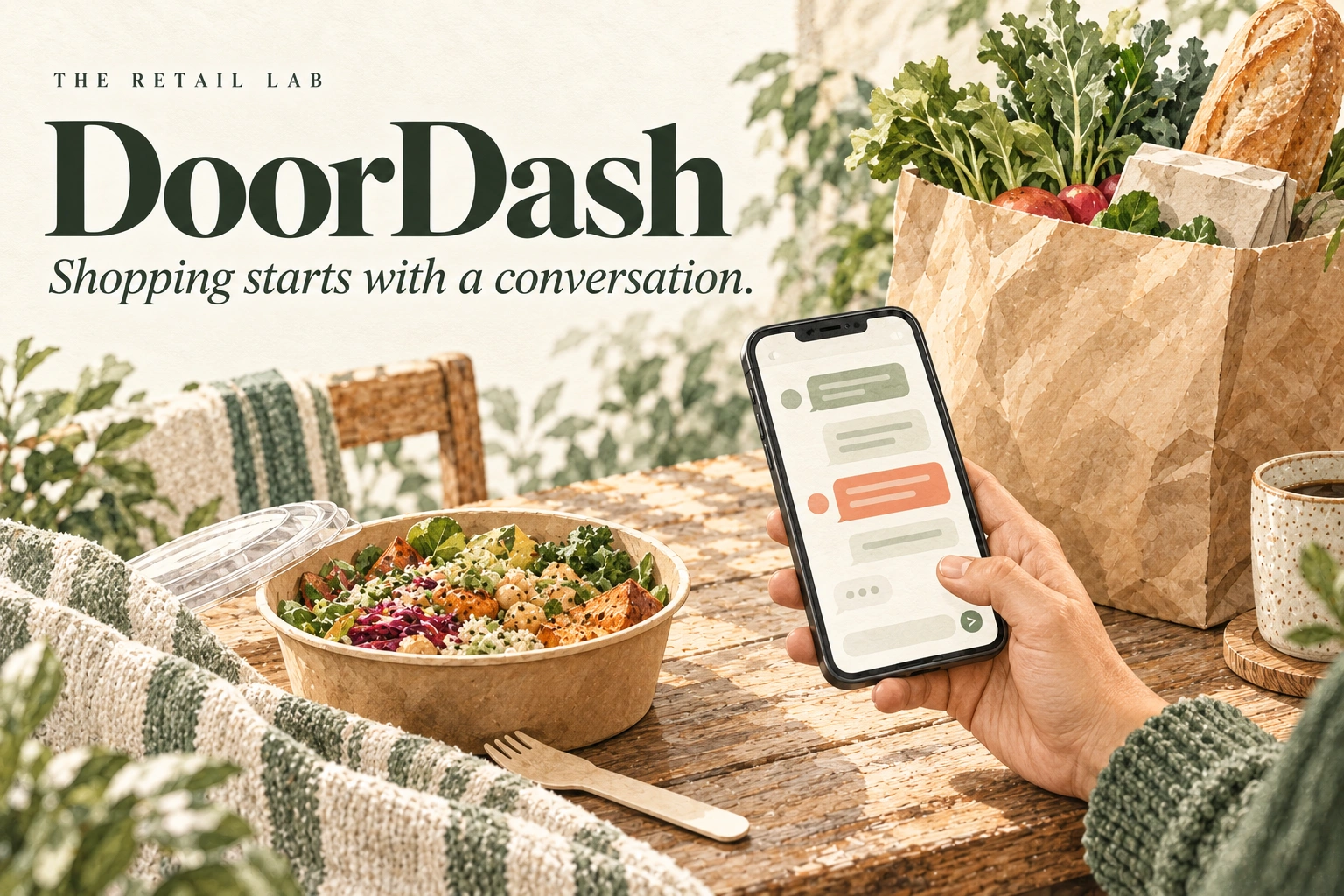
DoorDash announced text ordering on September 30, 2026. Customers can describe a meal, review a suggested cart and confirm checkout in the conversation. The U.S. experience is a beta with a waitlist.
It follows Ask DoorDash, announced June 11 for restaurant search and grocery shopping in selected iOS markets, with wider U.S. rollout planned. That launch also described cart building from recipe links, photos and shopping lists. These are different access stages, not evidence that every shopper can use every feature today.
A separate September 30 announcement introduced a corporate ordering connector using the Model Context Protocol. It lets compatible workplace AI tools find items, build carts, place orders and track deliveries. DoorDash named early beta partners and opened a broader company waitlist. The limited beta focuses on companies ordering for their employees.
Why retailers should pay attention
A customer asking for dinner for four is starting with a need. Our view is that this gives retailers a reason to look closely at the information behind the shopping experience: product descriptions, pack sizes, prices, availability and suitable alternatives.
An easy conversation can still produce a frustrating order if the wrong quantity arrives or a substitution misses the customer’s needs. For a grocer or consumer brand, getting those details right is a practical place to start.
The primary announcements support food, grocery and office-ordering examples. We have not verified broad AI ordering coverage for fashion or electronics. A wider marketplace assortment alone would not establish that coverage.
Read the reported results carefully
DoorDash reports grocery baskets built five times faster using June 2026 marketplace data. It also reports nearly 50% higher basket value and about 60% more unique items versus the same consumers’ traditional orders, measured in August through early September 2026.
These are DoorDash’s comparisons. They do not establish that the assistant caused incremental sales or profit. The announcement does not disclose a randomized comparison, full costs or merchant margins. A bigger basket could reflect a different shopping mission.
A useful first test
Our recommendation: test one repeat shopping task before expanding the range. Weekly grocery replenishment is a useful example. Keep the comparison focused on the same customer need and similar products.
- Check cart accuracy: items, quantities, prices and substitutions.
- Measure completed orders, corrections, refunds and support time alongside checkout speed.
- Compare contribution after product cost, discounts, fees and fulfillment. Keep revenue separate from profit.
- Look at repeat purchases. An easier first order only helps if the experience holds up.
Give someone responsibility for fixing bad recommendations and missing product data. Agree on when to stop the test if accuracy or service worsens. Those are proposed checks for a retailer’s own trial, not claims about DoorDash’s implementation.